Train Harder, Not Longer
Train Harder, Not Longer
We’ve all heard the phrase:
“Less is more.”
One of bodybuilding’s most influential minds, Mike Mentzer, built an entire training philosophy around that idea.
He believed superior results didn’t come from spending more time in the gym, doing more exercises, or training more days each week.
They came from demanding more of every repetition.
His philosophy was simple:
Train with enough intensity that your body has no choice but to adapt.
Today, it’s common to see people spend an hour or more in the gym, scrolling their phones between sets, adding exercise after exercise, feeling like they accomplished a lot—but never truly challenged.
They mistake being busy for being effective.
Instead of asking:
“How many exercises should I do?”
Ask yourself:
“How hard can I make this set?”
One more repetition.
Five more pounds.
Better technique.
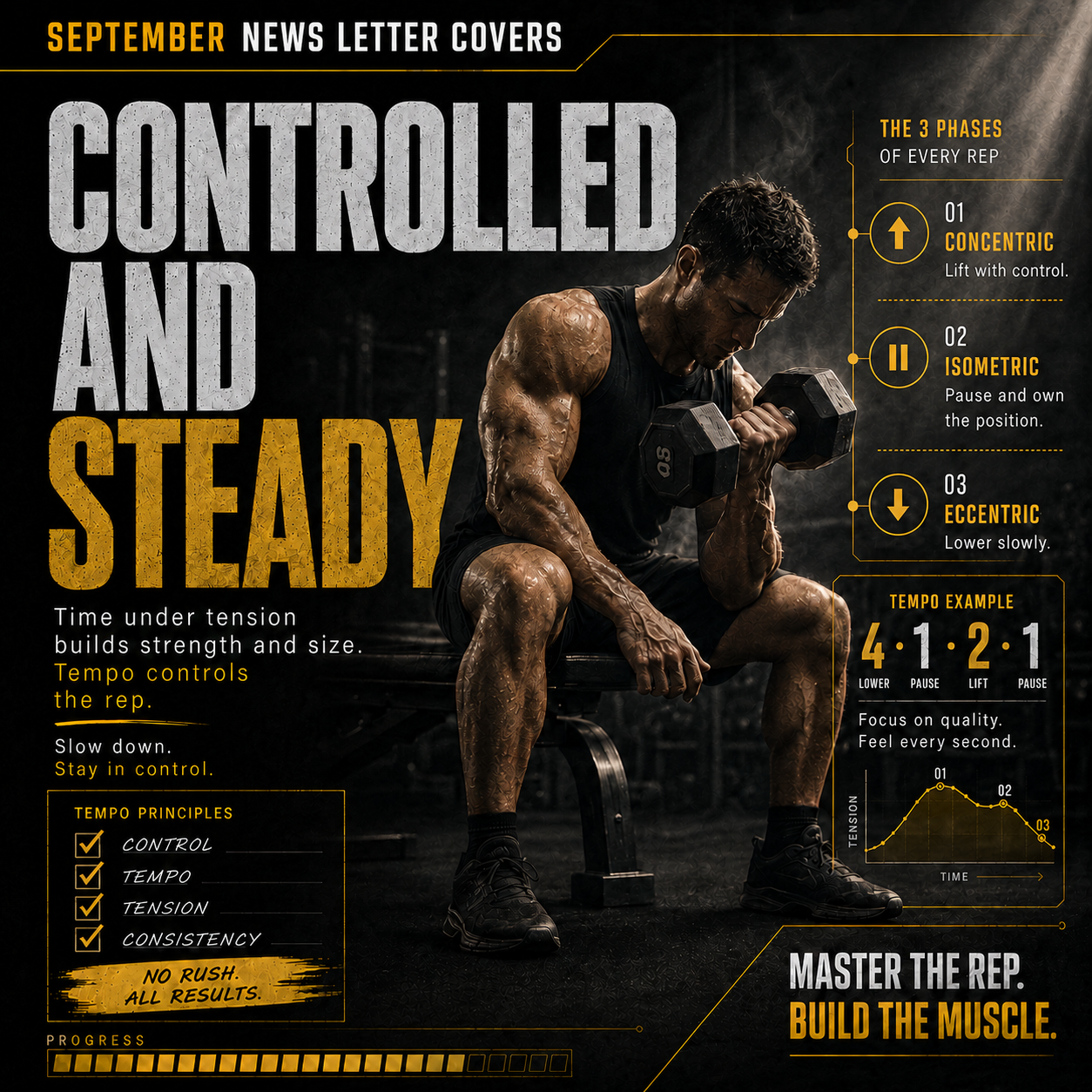
A slower, more controlled tempo.
Greater focus.
Less comfort.
More effort.
Intensity isn’t about feeling tired.
It’s about asking your muscles to do something they couldn’t do before.
The final repetition should require everything you have while still maintaining good technique.
If you routinely finish every set feeling like you had five more repetitions left, your body has very little reason to adapt.
The body doesn’t reward time invested. It rewards stress overcome.
Intensity Is the Forgotten Principle
Most people don’t need more information.
They don’t need another workout program.
They don’t need another fitness influencer.
They don’t need another motivational video.
They need more intention.
They need more intensity.
Your body doesn’t adapt to how long you train.
It adapts to how hard you train.
Because intensity is the goal, your workouts don’t need to last forever.
In fact, they probably shouldn’t.
If you’re truly training with maximum focus and effort, most workouts can be completed in 30 to 45 minutes—or less.
After that, fatigue accumulates, focus declines, and the quality of your work often begins to suffer.
Train hard enough that your body needs to recover—not so long that you’re simply accumulating more fatigue.
I know the gym may be your happy place and you like spending time there.
I get it.
It’s my happy place too.
But imagine this.
You’re sitting at home relaxing, not exerting yourself at all, and you crack open a cold beer.
Now imagine you’ve spent the last few hours working outside in the summer heat, sweating, lifting, digging, and earning it.
Then you crack open that same cold beer.
Which one tastes better?
The beer didn’t change.
You did.
That’s the difference intensity creates.
One thing to keep in mind is that intensity only works when it’s paired with recovery.
Growth doesn’t happen while you’re lifting.
It happens afterward, when your body repairs itself and becomes stronger than before.
Recovery isn’t optional.
If your goal is to build strength and muscle, your calories need to support that goal, your protein intake should be at least 1 gram per pound of body weight per day, your sleep should be a priority, and taking care of your body through mobility work, stretching, chiropractic care, massage, and other recovery strategies allows you to come back stronger for your next workout.
Train hard.
Recover.
Adapt.
Repeat.
A Thought I Had After Watching a TikTok
Recently, I saw someone post:
“I am proof you can go to the gym five days a week, eat ‘healthy,’ and still be kind of fat.”
I don’t believe that statement proves what they think it proves.
It doesn’t mean working out doesn’t work.
It doesn’t mean eating healthy doesn’t work.
It usually means they aren’t training with enough intensity and/or they aren’t eating the way they believe they are.
One of the biggest problems in fitness is that we use vague words like healthy.
Healthy compared to what?
A salad covered in dressing can contain more calories than a cheeseburger.
A handful of almonds can easily become 500 calories.
Smoothies, protein bars, peanut butter, olive oil, nuts, and “clean” snacks are all nutritious foods—but they’re also calorie-dense.
You can absolutely eat nutritious foods and still consume more calories than your body burns.
That’s why nutrition requires more than good intentions.
It requires measurement.
Likewise, going to the gym five days each week doesn’t automatically mean you’re training effectively.
Simply showing up isn’t the same as challenging your body.
Mike Mentzer often argued that if you’re able to train hard five or six days every week without needing additional recovery, you may not be pushing each workout as close to your true capacity as you think.
Whether or not you agree with every aspect of his philosophy, the underlying principle is worth considering:
Real change demands intensity.
If every workout leaves you feeling like you could have done much more…
You probably could have.
The Lesson Beyond the Gym
This isn’t really about bodybuilding.
It’s about life.
People go through the motions.
They mistake activity for progress.
They expect extraordinary results from ordinary effort.
Then they become frustrated when nothing changes.
The same thing happens with nutrition.
With rehabilitation.
With mobility.
With business.
With relationships.
Showing up is important.
But showing up alone doesn’t create change.
Change happens when we demand more of ourselves than we demanded yesterday.
Train with intention.
Recover with purpose.
Adapt through consistency.
Demand more of yourself today than you demanded yesterday.
Because extraordinary results have never been produced by ordinary effort.ts have never been produced by ordinary effort.