How to Train the Mentzer Way
How to Train the Mentzer Way
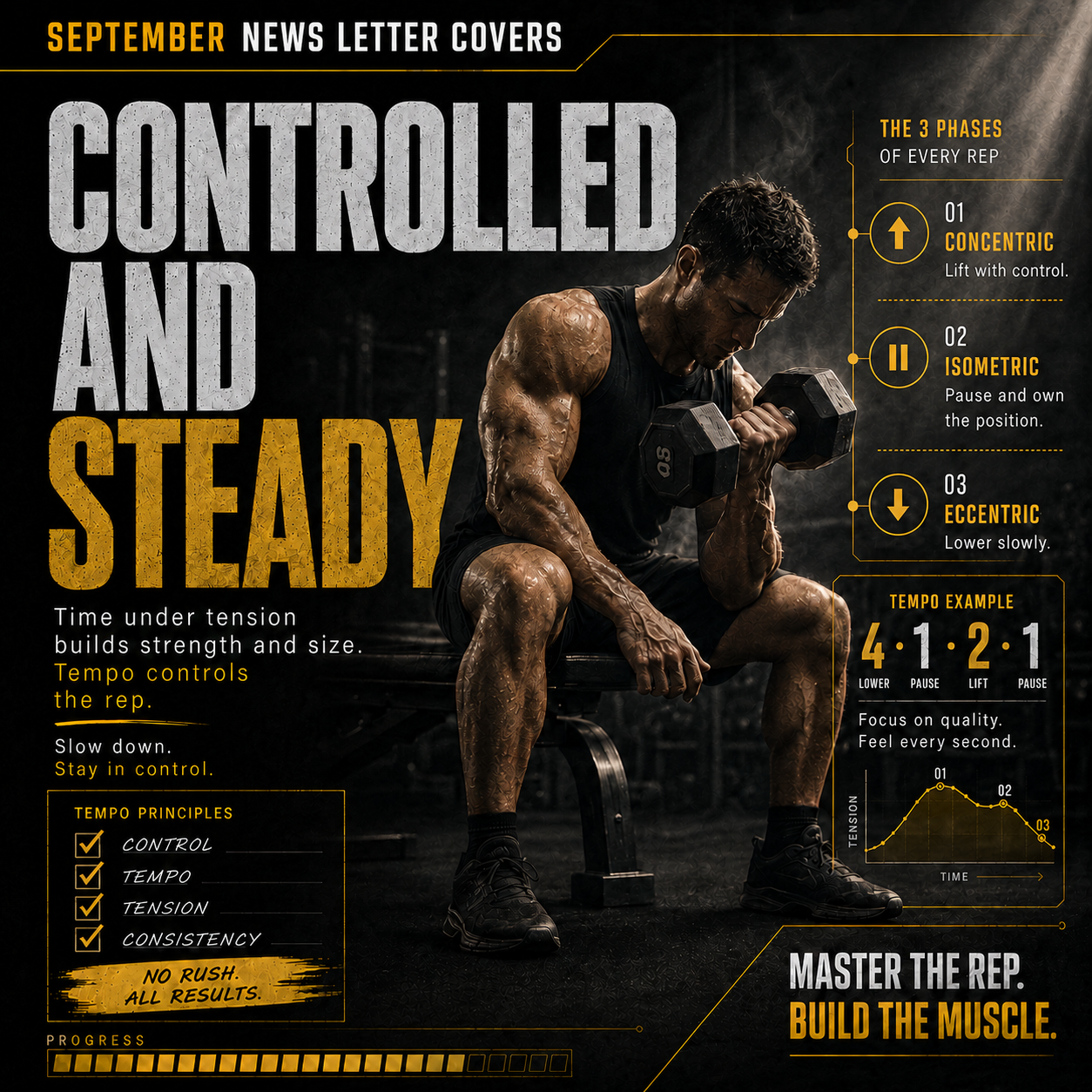
Mike Mentzer remains one of the most influential figures in bodybuilding because he challenged the idea that better results come from doing more.
His philosophy was simple:
Train with enough intensity that your body has no choice but to adapt.
While many people focus on adding more exercises, spending longer in the gym, or training more days each week, Mentzer believed the quality of your effort mattered far more than the quantity of your work.
That philosophy still holds true today.
The key is understanding when and how to apply it safely.
Intensity Is Earned
After reading this article, some people may think I’m suggesting everyone should immediately start training like Mike Mentzer.
That’s not what I’m saying.
The goal isn’t simply to train harder.
The goal is to train as hard as your body is prepared to handle.
Your muscles aren’t the only tissues adapting to lifting weights.
Your tendons, ligaments, joints, bones, and connective tissue all need time to become stronger.
While your muscles may feel ready for heavier weights after only a few weeks, those supporting tissues often require months—or even years—to fully adapt.
That’s why intensity must be earned.
Phase One: Build the Foundation
Everything begins with your core.
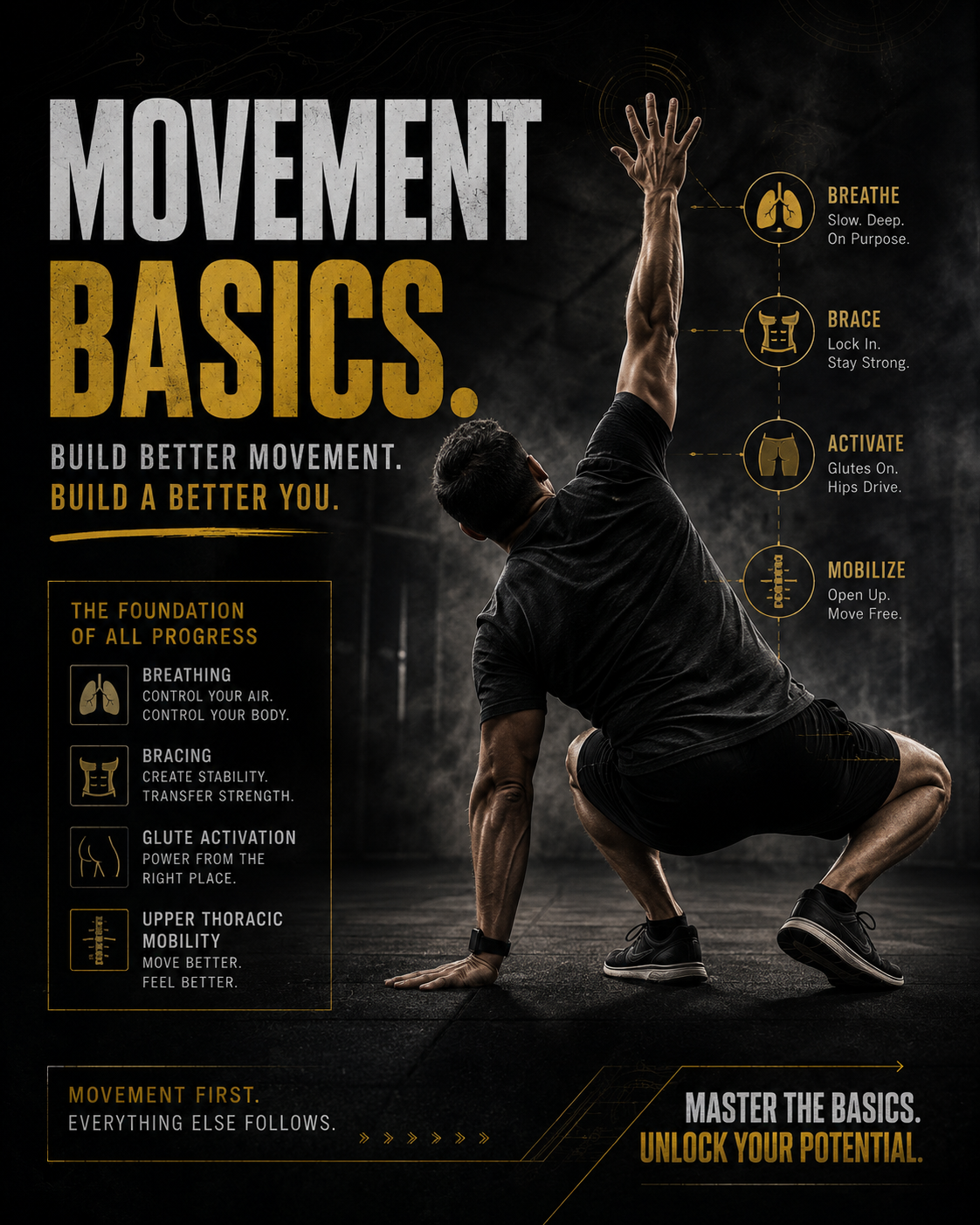
Before you worry about lifting heavier weights, you need to learn how to create stability through proper breathing and bracing.
Your core isn’t just your abdominal muscles—it’s the entire system that stabilizes your spine, including your diaphragm, abdominal wall, pelvic floor, and deep spinal muscles.
Learning to breathe into your abdomen and create 360-degree pressure around your spine provides the stable foundation needed to safely produce force.
Once that breath is established, you must learn how to brace—creating tension and pressure around the spine so your body can safely transfer force.
Without that foundation, strength is limited, movement becomes less efficient, and the risk of injury increases.
Once your breathing and bracing mechanics are locked in, your focus should shift to mastering the fundamental movement patterns.
Build your program around compound exercises such as:
- Squats
- Leg Press
- Deadlifts
- Dumbbell Bench Press
- Dips
- Cable Rows
- Hammer Strength Rows
- Lat Pulldowns
- Pull-Ups
- Dumbbell Shoulder Press
Compound exercises involve multiple joints and multiple muscle groups working together. They allow you to lift heavier loads, develop total-body strength, improve coordination, and provide the greatest return for your time in the gym.
Isolation exercises, on the other hand, primarily train a single muscle through movement at one joint. Examples include:
- Biceps Curls
- Triceps Pushdowns
- Leg Extensions
- Leg Curls
- Lateral Raises
- Calf Raises
- Pec Flyes
Isolation exercises certainly have their place, but they should supplement your program—not form its foundation. Early in your training, your priority should be learning to move your body as one coordinated unit before trying to maximize the development of individual muscles.
For most beginners, I recommend approximately:
- 2–3 compound exercises per muscle group
- 1–2 isolation exercises as needed
- 3–5 working sets per exercise
- 10–15 repetitions per set
The weight selection is where many people go wrong.
If you can perform more than 15 quality repetitions, the weight is probably too light.
If you can’t reach 10 repetitions while maintaining good form, the weight is probably too heavy.
Choose a weight that challenges you while allowing excellent technique on every repetition.
Master movement before chasing heavier weights.
Phase Two: Earn the Right to Train Heavy
There isn’t a universal timeline because everyone adapts differently.
For many people, this may take about a year of consistent training.
Once your technique is solid, your breathing and bracing become automatic, and your muscles, tendons, ligaments, bones, and connective tissue have adapted to regular training, heavier loading can begin.
Before we go any further, it’s important to understand that intensity and failure are not the same thing.
Mike Mentzer built his philosophy around taking working sets to muscular failure because his goal was maximizing muscle growth.
That approach can be incredibly effective for experienced lifters.
But not everyone needs—or should—train that way.
An elderly adult trying to maintain independence…
A stay-at-home mom working to become stronger for her family…
Someone recovering from an injury…
Or a patient simply trying to improve their health…
None of these people need to push every set to complete muscular failure.
What they do need is intensity.
Intensity means giving your best effort relative to your current ability.
It means choosing challenge over comfort.
It means doing one more repetition when you safely can.
It means adding five pounds when your body is ready.
It means moving with purpose instead of simply going through the motions.
Whether you’re 25 or 75, a competitive bodybuilder or someone who has never touched a weight before, the principle remains the same:
Growth begins when you ask your body to do more than it’s done before.
This is where Mentzer’s philosophy becomes valuable.
Instead of adding more exercises or spending more time in the gym, the focus shifts toward making each working set count.
Mentzer often recommended selecting a weight that allowed approximately six repetitions.
If you can perform seven, eight, or nine quality reps, the weight is probably too light.
If you reach six repetitions with perfect technique and cannot perform a seventh despite maximum effort, you’ve likely found an appropriate training weight.
The objective isn’t simply to lift heavy.
The objective is to create a stimulus powerful enough that your body has no choice but to adapt.
Phase Three: Recovery Is Where Growth Happens
Many people believe they build muscle while they’re in the gym.
They don’t.
Training is simply the stimulus.
Recovery is what produces the adaptation.
Every hard workout creates microscopic damage to muscle tissue and places stress on your joints, tendons, ligaments, bones, and nervous system. Your body responds to that stress by repairing and strengthening those tissues—but only if you give it the resources to do so.
You don’t get stronger because you lifted weights.
You get stronger because your body recovered from lifting weights.
This is why two people can follow the exact same training program and experience completely different results.
The person who prioritizes recovery will almost always make greater progress than the person who simply trains harder.
Recovery starts with nutrition.
If your goal is to build muscle, your calorie intake needs to support growth. While a slight calorie deficit can help preserve muscle during fat loss, building new muscle tissue generally requires consuming enough energy to fuel training and recovery.
Protein is equally important.
The Recommended Dietary Allowance (RDA) for protein is designed to prevent deficiency—not to maximize muscle growth or athletic performance.
If your goal is to build strength and muscle, your protein intake should be substantially higher than merely “adequate.” A simple rule of thumb is to consume at least one gram of protein per pound of body weight each day. For a 180-pound individual, that means aiming for a minimum of 180 grams of high-quality protein daily. Spreading that protein across multiple meals throughout the day helps provide your body with a consistent supply of amino acids to support muscle repair, recovery, and growth.
Sleep may be the most underrated performance enhancer available.
Most of your recovery processes—including muscle protein synthesis, hormone regulation, tissue repair, and nervous system recovery—occur while you sleep. If you’re consistently sleeping five or six hours each night, you’re limiting your body’s ability to adapt no matter how good your training program is.
Recovery also includes movement outside the gym.
Walking, light mobility work, and regular stretching help maintain joint motion, improve tissue quality, reduce stiffness, and prepare your body for future training sessions.
Finally, don’t overlook self-care.
Chiropractic care can help restore joint motion and improve movement quality.
Massage and other soft tissue therapies can reduce muscle tension and improve tissue mobility.
Neither replaces good programming, proper nutrition, or adequate sleep—but when combined with them, they can help you recover more effectively and continue training consistently.
The strongest athletes aren’t simply the ones who train the hardest.
They’re the ones who recover the best.
Because the workout is only the signal.
Recovery is where your body decides to become stronger.
Remember…
High intensity does not mean reckless lifting.
It does not mean sacrificing technique.
It does not mean trying to impress people in the gym.
Real intensity means maintaining excellent form while demanding everything your body can safely produce.
Before intensity comes technique.
Before technique comes breathing.
Before breathing comes bracing.
Before heavier weights comes tissue adaptation.
Before advanced training comes consistency.
Before adaptation comes recovery.
Advanced techniques like forced reps, negatives, and rest-pause training certainly have their place—but only after years of mastering the fundamentals.
Remember, the workout is only the stimulus.
Your body changes because it recovers from that stimulus.
Train with purpose.
Recover with intention.
Then repeat the process consistently.
Because your body doesn’t adapt to how long you train.
It adapts to how hard you train—provided you’ve earned the right to train that hard and given your body everything it needs to recover afterward.