Take a deep breath.
What moved?
Did your chest and shoulders rise?
Now take another deep breath.
What did your stomach do?
Did it move outward away from your body? Did it pull inward toward your spine? Or did it barely move at all?
If your chest and shoulders are doing most of the work, that’s a problem.
If your stomach pulls inward when you breathe, that’s an even bigger problem.
Have you ever said:
“I was just putting on my socks and my back went out.”
“I was loading the dishwasher and suddenly I couldn’t stand up.”
“I was getting my kids out of the car and threw my back out.”
The question is: why can something so simple leave you hurting for days or even weeks?
One major reason is a lack of pressure and stability throughout your core.
The Soda Can Test
Grab an unopened soda can and squeeze it as hard as you can.
What happens?
Nothing at all.
Now open the can and squeeze again.
It crumples with very little effort.
Why?
Because pressure creates stability.
When the can is sealed, the pressure inside pushes outward in every direction, helping the can resist outside forces. Once the pressure is gone, the structure becomes much easier to collapse.
Your spine works in a similar way.
Your core muscles, diaphragm, pelvic floor, and abdominal wall work together to create pressure inside your trunk. That pressure helps stabilize your spine during movement.
When you move without creating pressure first, your body has less ability to handle force efficiently. Over time, the joints, discs, ligaments, tendons, and muscles that are absorbing that force can become overloaded.
Eventually, even a simple task like putting on your socks can be the final straw.
The Sequence That Matters
Every movement should follow the same pattern:
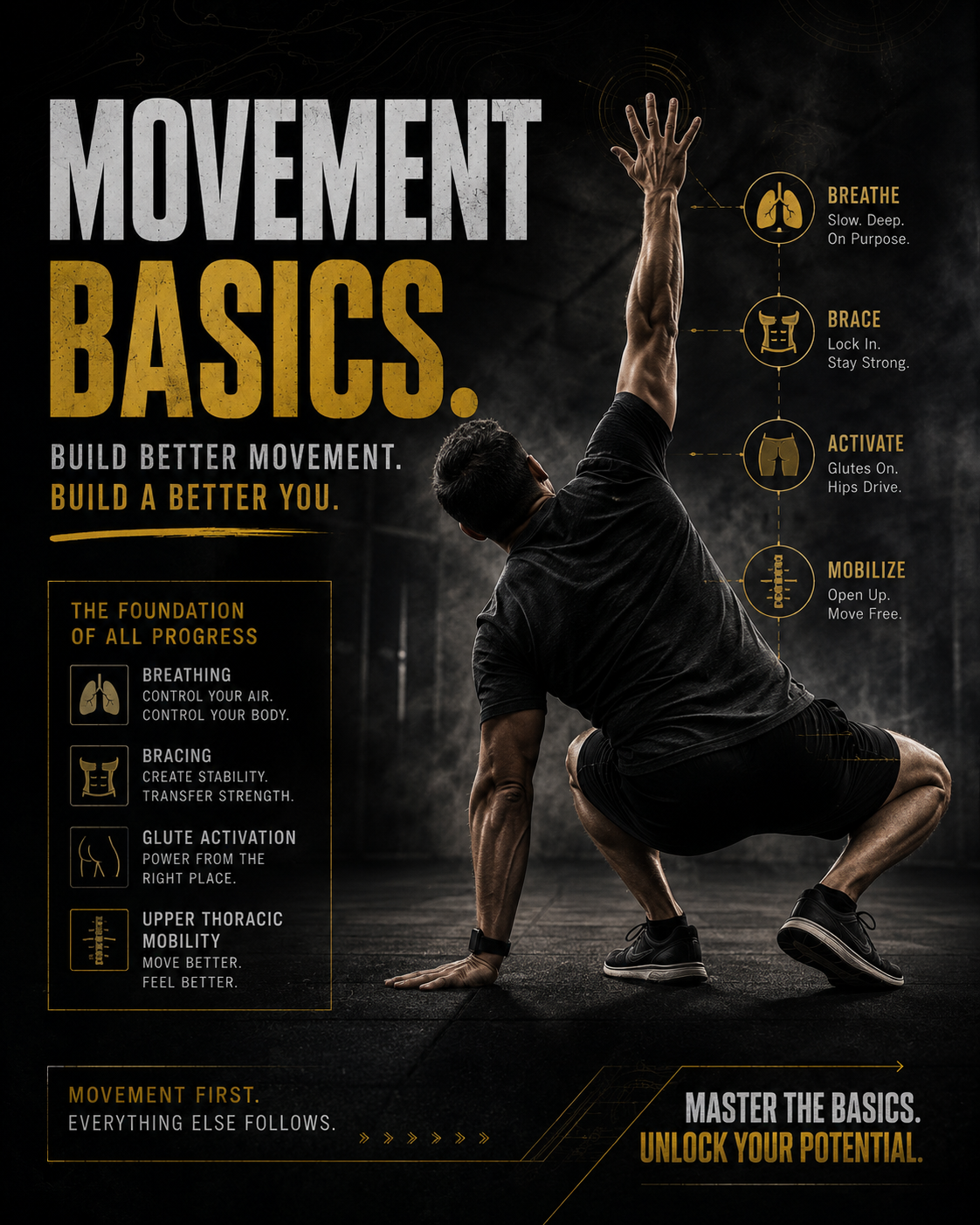
First, breathe.
Then, brace.
Then, move.
Always in that order.
Breathing creates pressure.
Bracing creates stability.
Movement becomes safer and more efficient because your spine has a stable foundation to work from.
Step 1: Learn How You Breathe
If your shoulders rise and your stomach pulls inward when you inhale, you’re not creating the pressure necessary for optimal stability.
Your first goal is to learn how to breathe properly.
If your stomach expands when you breathe but your shoulders still elevate excessively, you’re on the right track but still have room to improve.
If you can take a deep breath without your shoulders taking over and your abdomen expands naturally, you’re ahead of the game.
To learn how to properly breathe, click this link.
Step 2: Learn How To Brace
Once you can breathe properly, the next step is bracing.
Bracing means contracting your core after you take a breath in.
The goal isn’t to suck your stomach in.
The goal is to maintain the pressure you created with your breath while adding muscular stiffness around your trunk.
Pressure plus tension equals stability. That’s what protects your spine while you move.
To learn how to brace, click this link.
Step 3: Become Conscious Of Your Movement
This is where real change happens.
Before you bend down to unload the dishwasher.
Before you pick up your child.
Before you pull clothes from the dryer.
Before you grab the case of water from the back of the truck.
Before you carry all the groceries in one trip.
Pause.
Take a breath.
Brace your core.
Then move.
The more often you do this, the more automatic it becomes.
The more conscious you become of the way you move, the stronger, more resilient, and more capable your body becomes.
Change through conscious movement.